Enhanced Due Diligence in Casinos: A Practical Guide to High-Risk Players
A practical guide to casino enhanced due diligence, including PEP screening, source of wealth and source of funds checks, VIP risk, adverse media, and AML red flags.
Enhanced Due Diligence in Casinos: A Practical Guide to High-Risk Players
Casinos and iGaming operators handle high-value transactions, international customers, and in many cases significant cash activity. These characteristics can increase exposure to money laundering, corruption, sanctions, and reputational risk.
For most customers, standard Know Your Customer (KYC) and Customer Due Diligence (CDD) controls may be sufficient. When risk rises, however, compliance teams need a deeper understanding of the customer, their wealth, and the origin of the funds being used.
This is where Enhanced Due Diligence (EDD) becomes critical.
What Is Enhanced Due Diligence in Casinos?
Enhanced Due Diligence is a deeper level of investigation applied to customers, transactions, or relationships that present elevated financial crime risk.
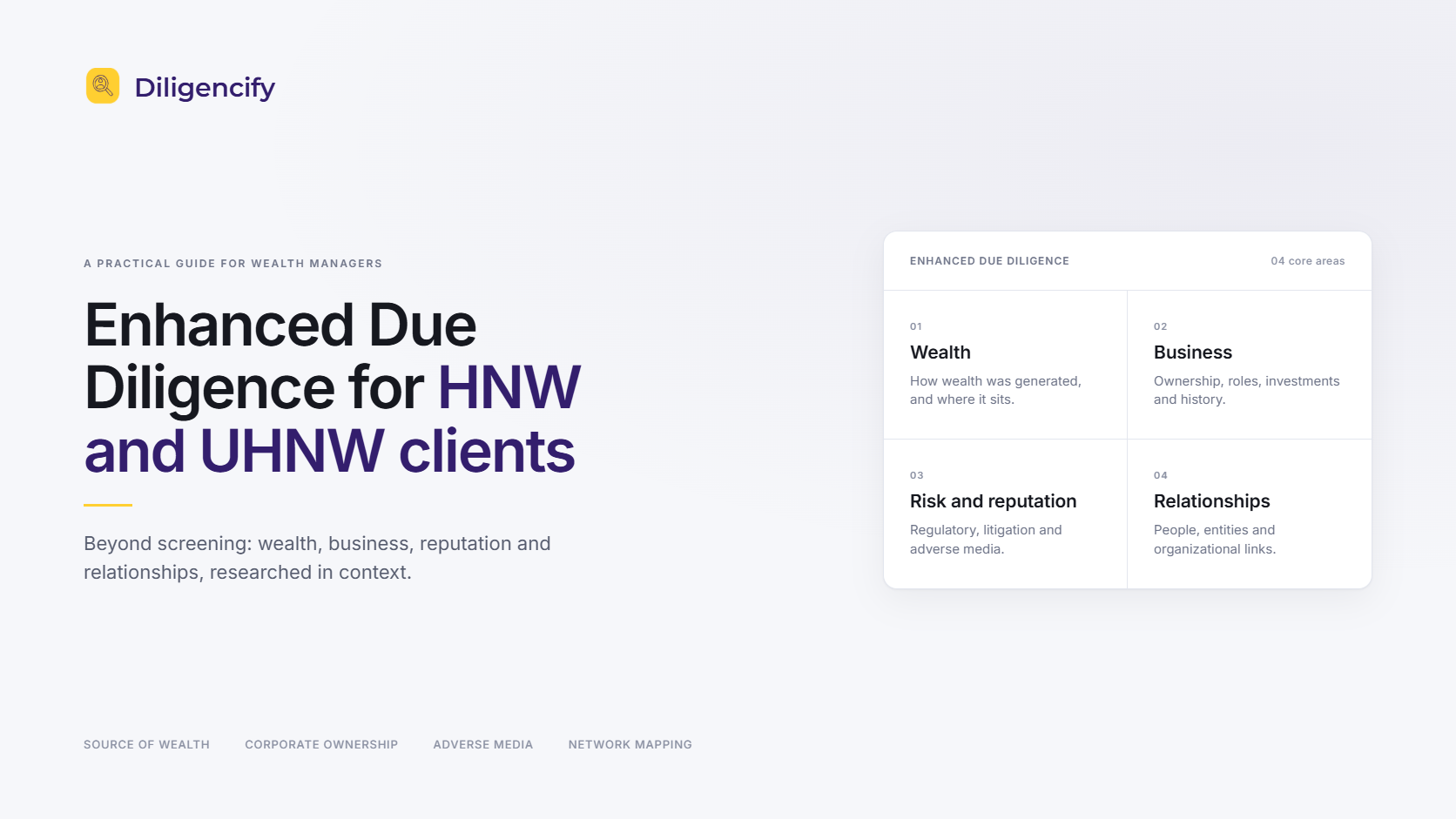
EDD goes beyond basic identity verification. It seeks to establish a defensible understanding of who the customer is, how they accumulated their wealth, where the funds being used originate, whether political exposure or sanctions concerns exist, and whether the customer's financial activity is consistent with their known profile.
The underlying principle is simple: higher risk should result in deeper investigation and stronger corroboration.
When Should a Casino Consider EDD?
There is no single profile that defines a high-risk player. Risk usually arises from a combination of customer characteristics, transaction behavior, geography, relationships, and external intelligence.
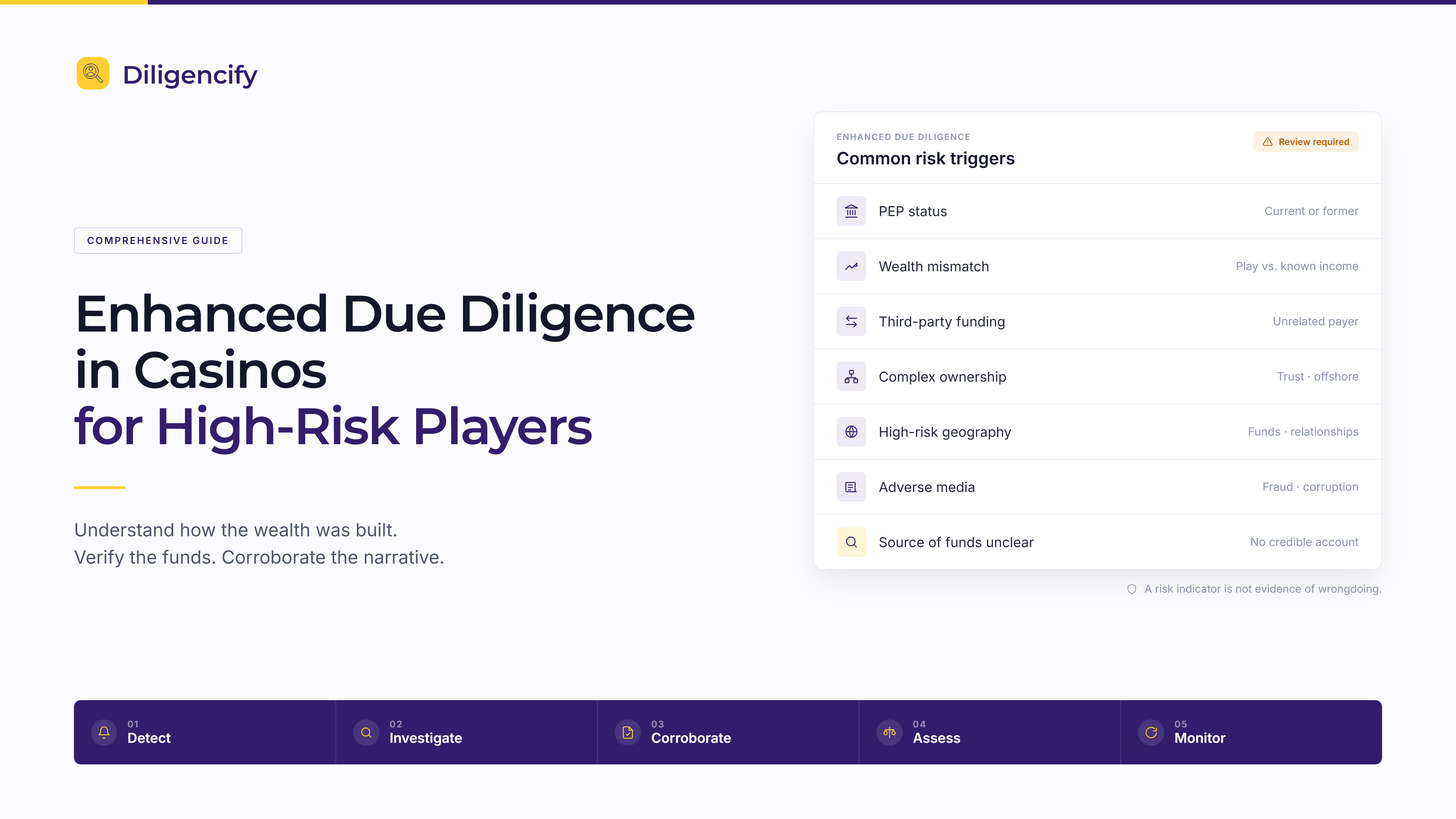
Common EDD triggers include:
- PEP Status: The customer is a current or former Politically Exposed Person
- VIP or High-Value Status: The customer conducts unusually large financial activity
- Wealth Mismatch: Gambling activity appears inconsistent with known income or wealth
- Third-Party Funding: Funds originate from unrelated individuals or entities
- Complex Ownership: The customer uses corporate, trust, or offshore structures
- High-Risk Geography: Funds or relationships involve higher-risk jurisdictions
- Adverse Media: Credible reporting raises concerns about fraud, corruption, or other misconduct
- Unusual Transactions: Large movements of funds occur with limited gambling activity
- Source of Funds Concerns: The customer cannot provide a credible explanation for the money being used
A risk indicator is not evidence of wrongdoing. EDD is designed to help compliance teams investigate, contextualize, and manage elevated risk.
Source of Wealth vs. Source of Funds
One of the most important distinctions in casino EDD is between Source of Wealth (SoW) and Source of Funds (SoF).
Source of Wealth
Source of Wealth explains how an individual accumulated their overall financial position.
Examples may include:
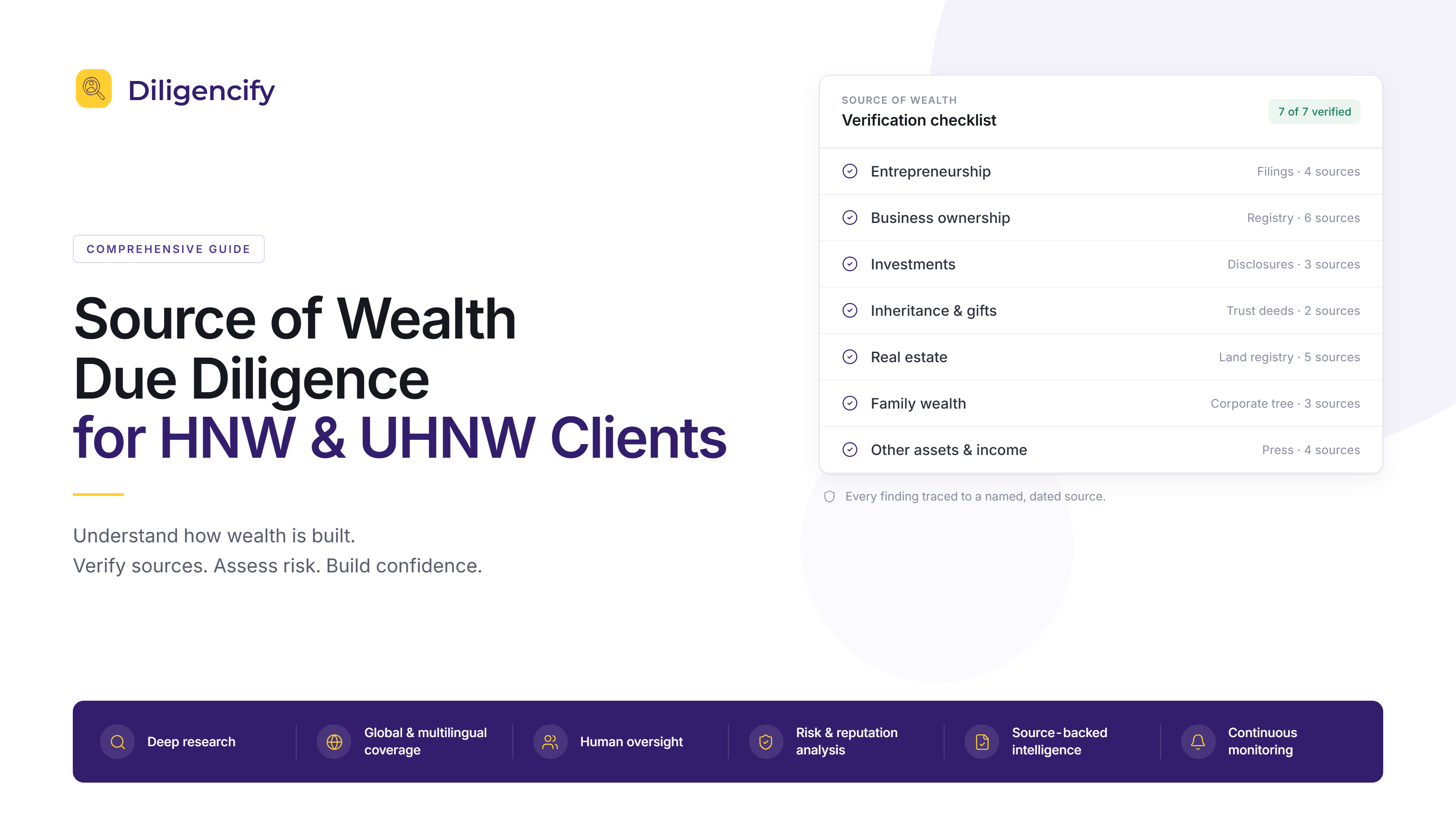
- Business ownership or a company sale
- Executive compensation
- Investments
- Inheritance
- Real estate
- Professional earnings
- Family wealth
A credible Source of Wealth assessment should determine whether the identified wealth-generating activities reasonably support the customer's financial profile.
Source of Funds
Source of Funds focuses on a narrower question: where did the specific money being deposited, transferred, or gambled come from?
A customer may have substantial legitimate wealth while a particular transaction still requires investigation.
For example, an entrepreneur may have generated significant wealth from selling a business. But if their casino account suddenly receives a large transfer from an unrelated offshore company, their overall net worth alone does not explain that transaction.
Why VIP Customers Require Particular Attention
VIP and high-value customers can present a unique compliance challenge.
They may use large deposits, international transfers, casino credit, private gaming arrangements, and dedicated relationship managers. None of these factors is inherently suspicious. However, the financial scale of the relationship can increase both risk and the consequences of inadequate due diligence.
The important principle is that customer value should never substitute for customer understanding.
Commercial teams, VIP hosts, and compliance functions should operate within clearly defined controls so high-value relationships receive appropriate scrutiny rather than preferential treatment.
What Should a Casino EDD Investigation Cover?
A strong investigation should combine multiple independent sources rather than relying on a single database search.
1. Identity and Professional Background
Establish and corroborate the customer's identity, residence, occupation, career history, and relevant business activity.
2. Business Ownership and Corporate Interests
Identify companies owned, controlled, or directed by the customer. Complex corporate structures, offshore entities, or unexplained intermediary companies may require additional investigation.
3. Source of Wealth
Understand the major activities or events responsible for creating the customer's wealth, including business ownership, liquidity events, compensation, investments, inheritance, and significant assets.
4. PEP Screening
Determine whether the customer is a current or former Politically Exposed Person and whether relevant family members or close associates create additional exposure.
PEP screening should be contextual. The nature of the position, jurisdiction, business relationships, and surrounding allegations can materially change the risk assessment.
5. Sanctions and Watchlists
Screen the customer and relevant associated entities against applicable sanctions and regulatory lists. Potential matches should be resolved carefully rather than treated as confirmed solely because of a similar name.
6. Adverse Media
Review credible news and public sources for information involving corruption, fraud, money laundering, organized crime, regulatory misconduct, or other material reputational concerns.
Context matters. An old commercial dispute should not automatically be treated the same way as a recent corruption investigation.
7. Litigation and Regulatory History
Court proceedings, regulatory actions, bankruptcies, and enforcement matters can provide useful context, particularly where multiple events reveal a pattern.
8. Relationships and Associates
Risk can extend beyond the primary customer. Business partners, family members, beneficial owners, close associates, and third parties providing funds may materially change the overall assessment.
Casino AML Red Flags That Deserve a Closer Look
Transaction monitoring and external due diligence are most effective when used together.
Examples of activity that may justify further investigation include:
- Large buy-ins followed by minimal play and rapid redemption
- Repeated transactions close to reporting thresholds
- Deposits from unrelated third parties
- Multiple funding methods without a clear explanation
- Withdrawals to accounts different from the original funding source
- Activity significantly disproportionate to known employment or business interests
- Sudden increases in gambling volume
- Funds linked to higher-risk jurisdictions
- Customers unable or unwilling to substantiate explanations about their money
- Material discrepancies between customer-provided information and independent research
No single indicator should automatically determine the outcome. The objective is to understand whether the customer's financial behavior is reasonable when viewed against the broader profile.
Why Open-Source Intelligence Matters in Casino EDD
Customer-provided documents are important, particularly when verifying specific funds. But they represent only one side of an investigation.
Open-source intelligence can independently test the customer's narrative.
If a customer describes themselves as a successful business owner, research can help determine whether the businesses exist, what role the customer plays, how long the businesses have operated, whether a major liquidity event occurred, and whether other public information supports the claimed financial profile.
The same investigation may identify corporate relationships, litigation, political exposure, adverse media, major transactions, philanthropy, or other information that would otherwise remain disconnected.
Effective EDD increasingly depends not on finding more data, but on connecting relevant information into a coherent and explainable assessment.
Technology Can Accelerate EDD, But Judgment Still Matters
Compliance teams now have access to sanctions databases, PEP screening tools, adverse media systems, transaction monitoring platforms, and AI-assisted research.
Technology can dramatically reduce the time required to identify and organize information. It should not replace analytical judgment.
A name match may be false. Negative news may lack credibility. A lawsuit may have limited relevance to financial crime. An unusual source of wealth may have a legitimate explanation.
The goal is therefore not simply to generate more alerts. It is to produce structured, source-backed intelligence that investigators can review, challenge, and defend.
Building a More Defensible Casino EDD Process
An effective EDD workflow can be summarized in five stages:
- Detect the risk trigger
- Investigate the customer beyond standard KYC information
- Corroborate important claims using independent sources
- Assess the evidence in context
- Monitor the relationship as circumstances and external information change
The final investigation should make it easy for another compliance professional, auditor, or decision-maker to understand what was reviewed, what was found, and why the resulting risk assessment was reasonable.
How Diligencify Supports Enhanced Due Diligence
Complex individuals often leave information scattered across corporate records, news, litigation, professional histories, wealth events, political relationships, and other public sources.
Diligencify helps compliance and investigative teams bring that information together into structured, source-backed due diligence profiles in minutes.
For casino and gaming operators, Diligencify can support investigations into high-value customers, PEPs, and other elevated-risk relationships by helping analysts research Source of Wealth, business interests, affiliations, adverse media, litigation, political exposure, and reputational risk within a consolidated research workflow.
Diligencify complements existing KYC, screening, and transaction monitoring processes by providing a deeper intelligence layer for complex customer research.
Conclusion
Casino EDD is moving beyond basic identity verification and static screening.
The central question for compliance teams is increasingly: Does what we know about this person provide a credible explanation for the financial activity we are seeing?
Answering that question requires understanding wealth, business interests, relationships, reputation, political exposure, and financial context together.
For high-risk and high-value customers, deeper intelligence can transform due diligence from a compliance exercise into a more effective risk-management capability.