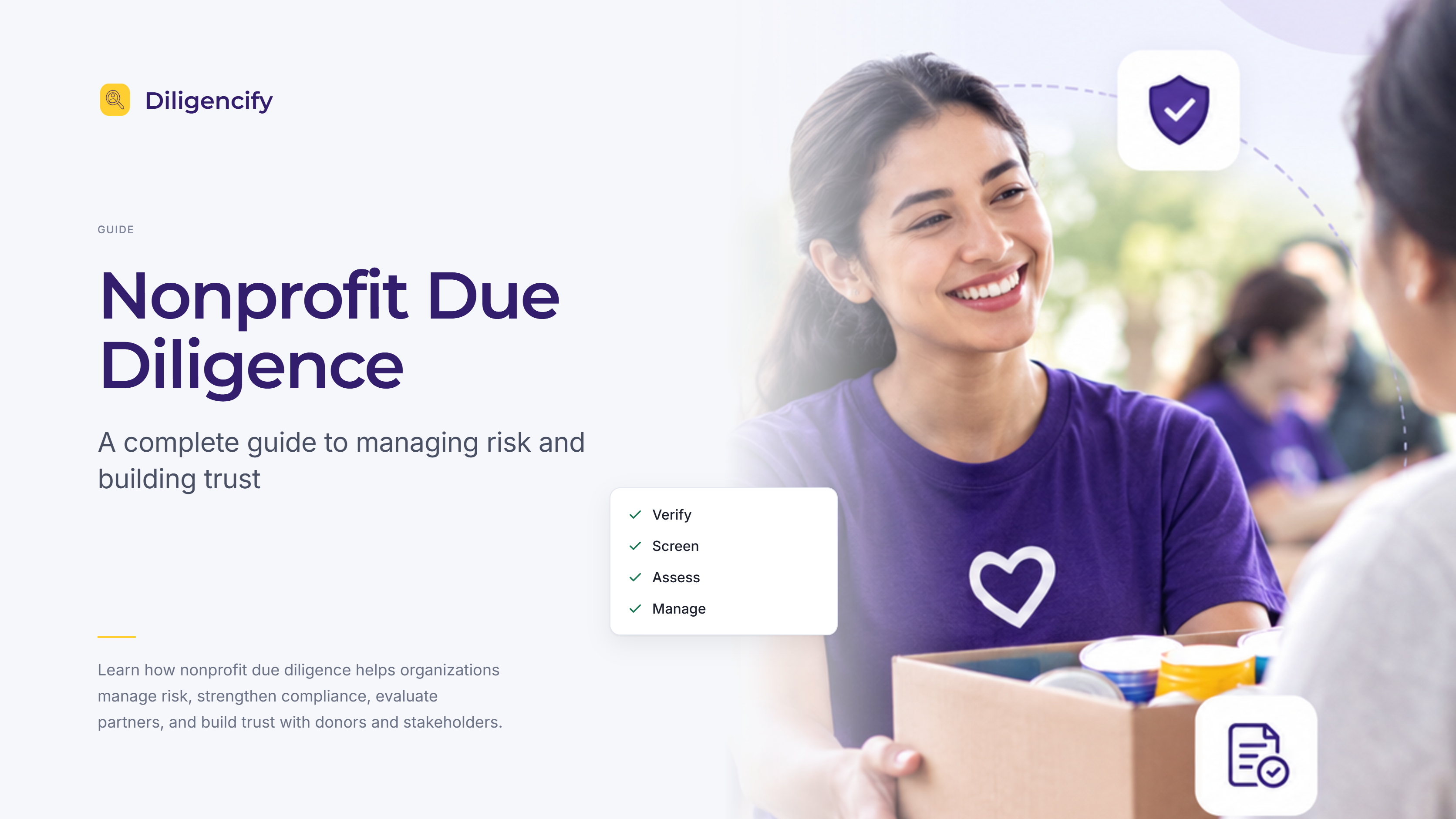
Nonprofit Due Diligence: A Complete Guide to Managing Risk and Building Trust
Learn how nonprofit due diligence helps organizations manage risk, strengthen compliance, evaluate partners, and build trust with donors and stakeholders.
Nonprofit Due Diligence: A Complete Guide to Managing Risk and Building Trust
Nonprofit organizations operate on trust. Donors, grantmakers, volunteers, beneficiaries, board members, and partners all expect an organization to use its resources responsibly and operate with transparency.
As nonprofits grow, however, managing risk becomes more complex. Organizations may work with vendors, fundraising partners, international organizations, grant recipients, consultants, volunteers, and other third parties. Each relationship can introduce financial, legal, reputational, or operational risk.
This is where nonprofit due diligence becomes essential.
What Is Nonprofit Due Diligence?
Nonprofit due diligence is the process of researching, verifying, and evaluating an organization, individual, vendor, partner, or funding recipient before entering into or continuing a relationship.
A strong due diligence process can help nonprofits answer important questions such as:
- Who are we working with?
- Is the organization legitimate and properly registered?
- Who owns or controls the organization?
- Are there regulatory or legal concerns?
- Does the partner have a history of financial or reputational problems?
- Can the organization deliver what it has promised?
The goal is not to eliminate every possible risk. Instead, due diligence gives nonprofit leaders the information they need to make informed decisions.
Why Due Diligence Matters for Nonprofits
1. Protecting Donor Trust
Donors expect their contributions to support legitimate and responsible initiatives. Weak third-party screening can expose nonprofits to relationships that damage donor confidence.
A documented due diligence process demonstrates that an organization takes responsible stewardship seriously.
2. Reducing Reputational Risk
A nonprofit can suffer reputational damage because of the actions of a third party, even when the nonprofit itself did nothing wrong.
Screening partners, vendors, beneficiaries, and other stakeholders before establishing relationships can reduce the likelihood of unexpected reputational issues.
3. Strengthening Compliance
Nonprofits may be subject to regulations related to financial reporting, charitable activities, sanctions, anti-money-laundering requirements, fundraising, and international operations.
Due diligence helps organizations identify potential compliance concerns before they become larger problems.
4. Improving Grant and Partner Selection
Nonprofits frequently distribute funds or collaborate with external organizations. Reviewing the financial health, leadership, governance, track record, and legal standing of potential partners can lead to better decisions.
What Should Nonprofits Check During Due Diligence?
A comprehensive nonprofit due diligence process can include several areas.
Organizational Verification
Confirm basic information such as legal name, registration status, operating location, leadership, and organizational structure.
Leadership and Governance
Review directors, officers, trustees, key executives, and other individuals who have significant influence over the organization.
Financial Information
Depending on the relationship, nonprofits may review financial statements, annual reports, funding sources, liabilities, and other available financial information.
Legal and Regulatory History
Organizations should consider whether a potential partner has been involved in litigation, regulatory actions, sanctions, enforcement actions, or other significant legal matters.
Reputation and Media
Negative news, public controversies, complaints, and other reputational signals can provide important context that may not appear in official registration records.
Common Challenges With Manual Due Diligence
Many nonprofits still rely on spreadsheets, emails, browser searches, and manually collected documents to conduct due diligence.
While these methods can work for small volumes, they become difficult to manage as an organization grows.
Common problems include:
- Inconsistent screening processes
- Missing or outdated information
- Time-consuming manual research
- Difficult-to-maintain records
- Limited visibility across teams
- Challenges demonstrating an audit trail
A structured technology-enabled process can make due diligence more consistent and scalable.
How Technology Can Improve Nonprofit Due Diligence
Modern due diligence platforms can help organizations centralize research, organize information, identify potential risks, and maintain records of completed reviews.
Instead of repeatedly searching across disconnected sources, teams can establish a repeatable workflow for reviewing third parties.
The result can be faster decision-making, stronger documentation, and greater operational consistency.
A Practical Nonprofit Due Diligence Framework
A simple framework can be organized into five steps:
- Identify the third party — Collect core organizational and individual information.
- Verify the information — Confirm registration, leadership, ownership, and other relevant details.
- Screen for risk — Review legal, regulatory, sanctions, financial, and reputational indicators.
- Assess the relationship — Determine whether the identified risks are acceptable based on the relationship and context.
- Document and monitor — Record the decision and periodically reassess higher-risk relationships.
Conclusion
Nonprofit due diligence is more than a compliance exercise. It is a practical risk-management process that helps organizations protect their reputation, resources, stakeholders, and mission.
As nonprofits work with an increasing number of partners and third parties, having a consistent and scalable due diligence process becomes increasingly important.
The right technology can help nonprofit teams spend less time collecting information manually and more time making confident, informed decisions.