How Nonprofits Can Strengthen Third-Party Risk Management
Discover how nonprofits can identify, assess, and monitor third-party risks while maintaining efficient operations and protecting their reputation.
How Nonprofits Can Strengthen Third-Party Risk Management
Nonprofits rarely operate alone. They depend on vendors, contractors, consultants, fundraising platforms, grant partners, service providers, volunteers, and other third parties to deliver their missions.
These relationships create significant value, but they can also introduce risk.
A third party may have access to sensitive information, handle funds, represent the nonprofit publicly, or influence how services are delivered. If that third party fails to meet expectations, the nonprofit may face financial, compliance, operational, or reputational consequences.
That is why third-party risk management for nonprofits should be treated as an ongoing operational priority.
What Is Third-Party Risk?
Third-party risk is the potential for an external organization or individual to negatively affect a nonprofit's operations, finances, compliance obligations, reputation, or stakeholders.
Examples include:
- A vendor experiencing a major security incident
- A partner organization facing regulatory action
- A contractor providing inaccurate information
- A fundraising partner creating reputational concerns
- A supplier failing to meet contractual obligations
- A grant recipient misusing funds
Not every third party presents the same level of risk. Effective risk management therefore starts with understanding who the organization is dealing with and what role that party plays.
Why Nonprofits Need a Structured Approach
Smaller nonprofits may manage third-party relationships informally. However, as organizations grow, relying on individual knowledge and scattered documents becomes increasingly risky.
A structured approach creates consistency across teams and makes it easier to determine which relationships require deeper review.
Step 1: Build a Third-Party Inventory
Start by identifying all significant external relationships.
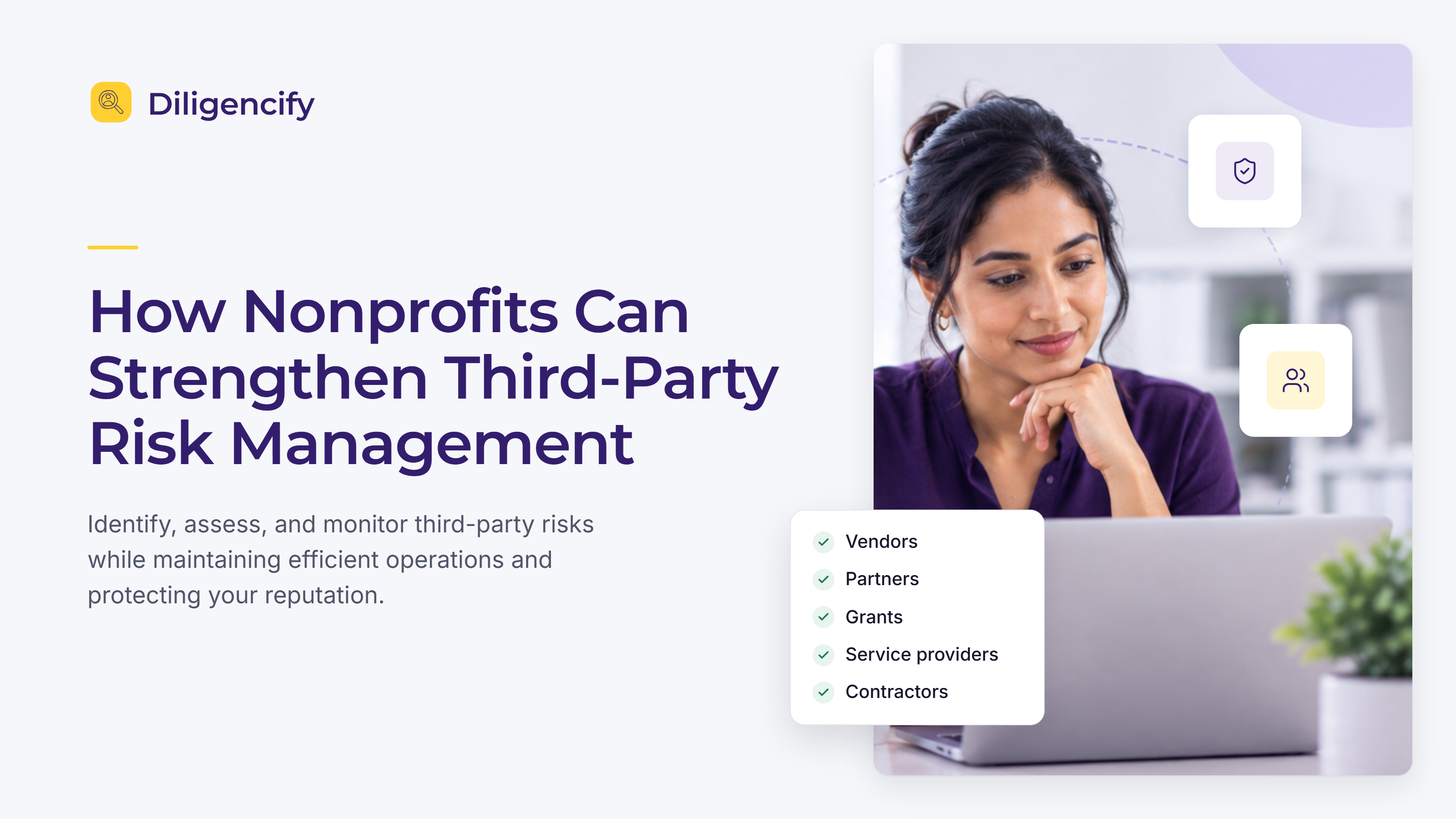
Your inventory may include:
- Vendors
- Grant partners
- Consultants
- Fundraising organizations
- Technology providers
- Contractors
- Service providers
- International partners
For each relationship, record basic information such as the organization name, relationship owner, services provided, contract status, and risk level.
Step 2: Categorize Third Parties by Risk
A nonprofit does not need to conduct the same level of review for every vendor or partner.
Risk-based classification can consider factors such as:
- Access to funds
- Access to sensitive information
- Geographic exposure
- Regulatory requirements
- Operational importance
- Public-facing responsibilities
- Relationship with beneficiaries
Higher-risk relationships should generally receive more comprehensive review.
Step 3: Conduct Due Diligence Before Onboarding
Before entering a significant relationship, organizations should verify key information about the third party.
Depending on the situation, this may include organizational registration, leadership, ownership, financial information, legal history, regulatory records, sanctions screening, and adverse media.
The objective is to identify potential concerns before the relationship begins.
Step 4: Document Your Decisions
One of the most overlooked aspects of third-party risk management is documentation.
A nonprofit should be able to answer:
- What information was reviewed?
- Who performed the review?
- What risks were identified?
- How were those risks evaluated?
- Who approved the relationship?
- When should the relationship be reviewed again?
Maintaining this information creates accountability and makes future reviews significantly easier.
Step 5: Monitor Important Relationships
Due diligence should not necessarily end after onboarding.
Organizations can establish periodic reviews for higher-risk third parties and trigger additional reviews when significant events occur.
Potential triggers include leadership changes, regulatory actions, negative media, major financial changes, ownership changes, or changes in the nature of the relationship.
The Problem With Spreadsheet-Based Risk Management
Spreadsheets can be useful for basic tracking, but they often become difficult to maintain as the number of relationships increases.
Information can become fragmented across spreadsheets, email threads, shared drives, and individual notes.
This makes it harder to establish a single source of truth and can increase the likelihood of missed reviews.
How Technology Can Help
Technology can help nonprofits centralize third-party information, standardize review processes, assign ownership, maintain documentation, and create repeatable workflows.
Automation can also reduce repetitive research and help teams focus their time on evaluating meaningful risks rather than collecting basic information.
A Simple Third-Party Risk Checklist
Before onboarding a significant third party, consider asking:
- Have we verified the organization's identity?
- Do we understand its ownership and leadership?
- Have we reviewed relevant legal and regulatory information?
- Have we assessed financial and operational risks?
- Have we considered reputational risks?
- Have we documented our decision?
- Do we know when the relationship should be reviewed again?
Conclusion
Third-party relationships are essential to the nonprofit sector, but they should not be managed without a clear understanding of risk.
A structured third-party risk management program helps nonprofits make better decisions, protect stakeholders, strengthen compliance, and build resilient operations.
By combining risk-based due diligence with centralized workflows and ongoing monitoring, nonprofits can create a process that scales alongside their mission.