University Due Diligence: How Higher Education Institutions Can Manage Risk
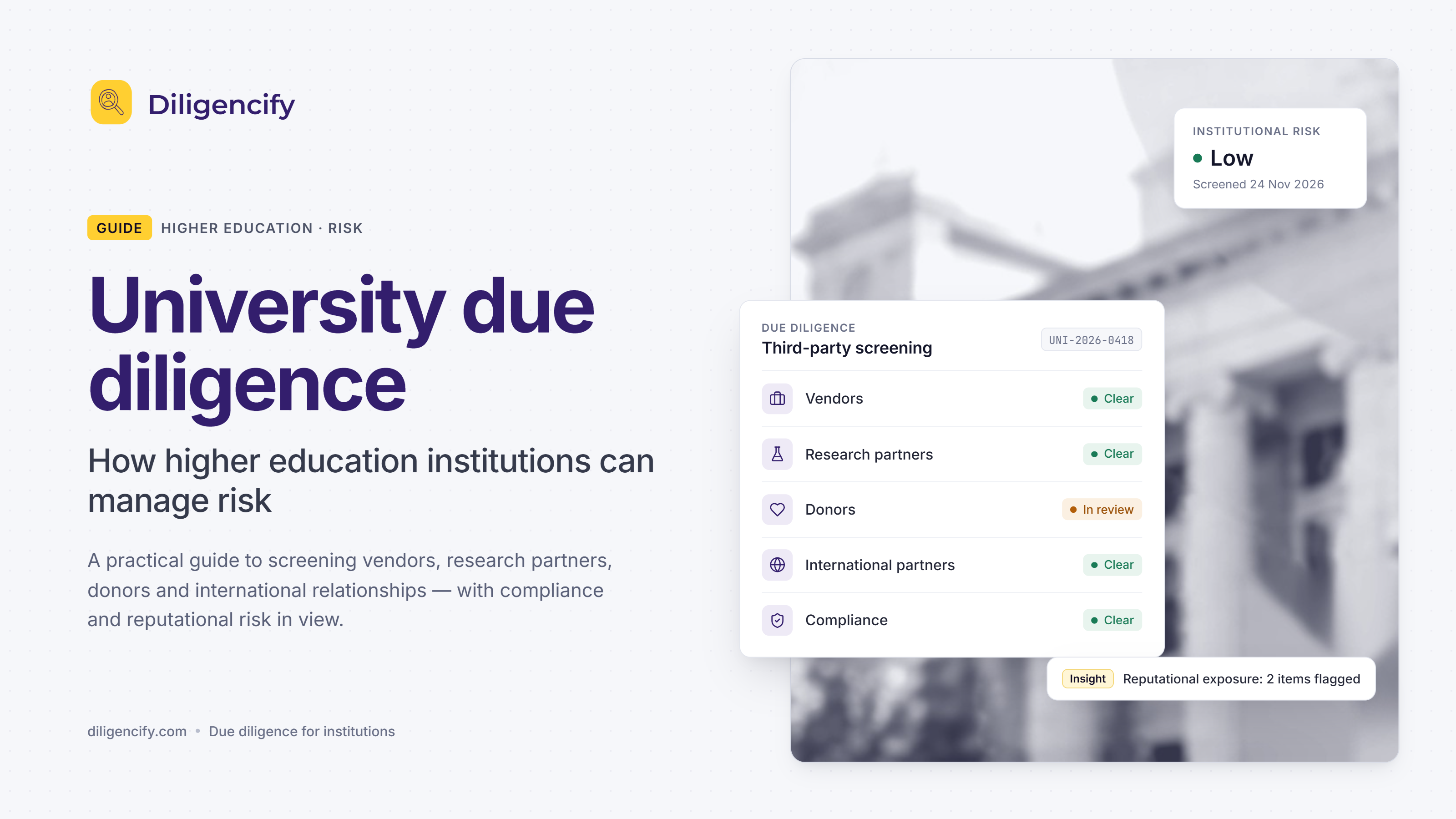
A practical guide to university due diligence, covering vendors, research partners, donors, international relationships, compliance, and reputational risk.
University Due Diligence: How Higher Education Institutions Can Manage Risk
Universities operate within complex networks of students, faculty, researchers, donors, vendors, governments, nonprofit organizations, corporations, and international partners.
These relationships enable universities to expand research, improve services, attract funding, and create new opportunities. At the same time, they can introduce financial, regulatory, legal, operational, and reputational risks.
A structured university due diligence process helps institutions understand these risks before entering important relationships.
What Is University Due Diligence?
University due diligence is the process of researching and evaluating individuals, organizations, vendors, donors, research partners, grant recipients, and other external parties before establishing or continuing a relationship.
The exact checks depend on the nature of the relationship.
For example, due diligence for a technology vendor may focus heavily on security and operational risk, while due diligence for an international research partner may require additional review of ownership, regulatory exposure, sanctions, and reputational information.
Why Due Diligence Matters in Higher Education
Protecting Institutional Reputation
Universities invest decades building their reputations. A relationship with a problematic organization or individual can create significant reputational consequences.
Supporting Compliance
Higher education institutions often operate across multiple regulatory environments. International partnerships, research funding, donations, procurement, and other activities can create additional compliance requirements.
Protecting Research Integrity
Research partnerships can involve intellectual property, sensitive information, funding arrangements, and complex international relationships.
Appropriate due diligence can help institutions better understand potential risks before entering these partnerships.
Managing Vendor Risk
Universities depend on technology companies, facilities providers, consultants, financial service providers, and many other vendors.
A structured vendor review process can help institutions identify potential concerns before onboarding.
Key Areas of University Due Diligence
1. Organizational Verification
Confirm the legal identity, registration, operating location, leadership, and organizational structure of relevant third parties.
2. Leadership and Ownership
Understanding who controls an organization can be important when assessing potential conflicts, regulatory exposure, and reputational concerns.
3. Legal and Regulatory Screening
Depending on the relationship, institutions may review litigation, regulatory actions, sanctions, enforcement records, and other legal information.
4. Financial Review
For significant relationships, financial information can help universities assess stability, funding sources, and potential financial concerns.
5. Reputation and Adverse Media
Public reporting can reveal issues that may not appear in formal corporate or organizational records.
6. Conflict of Interest Considerations
Universities should also consider whether relationships could create actual, potential, or perceived conflicts of interest involving faculty, administrators, donors, vendors, or partners.
Due Diligence for International Partnerships
International relationships can introduce additional layers of complexity.
Universities may need to consider different legal systems, sanctions requirements, geopolitical considerations, ownership structures, and regulatory environments.
A consistent screening process can help institutions identify potential issues before agreements are finalized.
Creating a Risk-Based University Due Diligence Program
Not every relationship requires the same level of investigation.
A risk-based approach can categorize relationships according to factors such as:
- Financial value
- Geographic exposure
- Access to sensitive information
- Research involvement
- Regulatory exposure
- Public visibility
- Strategic importance
Low-risk relationships may require basic verification, while higher-risk relationships can receive enhanced due diligence.
Centralizing the Due Diligence Process
One of the biggest challenges for universities is organizational complexity.
Different departments may maintain separate information about vendors, donors, research partners, and other third parties.
Centralizing due diligence workflows can improve visibility and reduce duplicated work.
A centralized system can help teams track reviews, assign responsibilities, document decisions, and maintain an audit trail.
Automating University Due Diligence
Technology can make due diligence more scalable by automating repetitive parts of the research and review process.
Instead of manually collecting information from multiple sources for every relationship, teams can establish standardized workflows and use technology to organize relevant information.
Automation does not replace institutional judgment. Instead, it gives teams better information and more time to focus on higher-value decisions.
A University Due Diligence Checklist
Before approving a significant external relationship, consider:
- Has the third party been properly identified and verified?
- Do we understand its ownership and leadership?
- Have relevant legal and regulatory risks been reviewed?
- Are there sanctions or other compliance concerns?
- Have reputational risks been considered?
- Are there potential conflicts of interest?
- Has the appropriate department reviewed the relationship?
- Has the decision been documented?
- Is ongoing monitoring required?
Conclusion
Universities operate in an environment where collaboration and openness are essential, but so is responsible risk management.
A structured due diligence program allows institutions to evaluate important relationships consistently while protecting their reputation, resources, research, and stakeholders.
By combining risk-based processes, centralized information, and technology-enabled workflows, universities can make due diligence more efficient without compromising the quality of their decisions.