Client Due Diligence for Wealth Management: A Complete Guide to KYC, Risk and HNW Client Research
A practical guide to client due diligence for wealth management firms, private banks, RIAs and family offices, covering KYC, source of wealth, reputation risk, HNW research and ongoing monitoring.
Client Due Diligence for Wealth Management: A Complete Guide to KYC, Risk and HNW Client Research
For wealth management firms, private banks, registered investment advisors and family offices, client due diligence is no longer simply a compliance requirement. It is an important part of understanding who a prospective client is, where their wealth came from, what risks may be associated with the relationship and how the relationship may evolve over time.
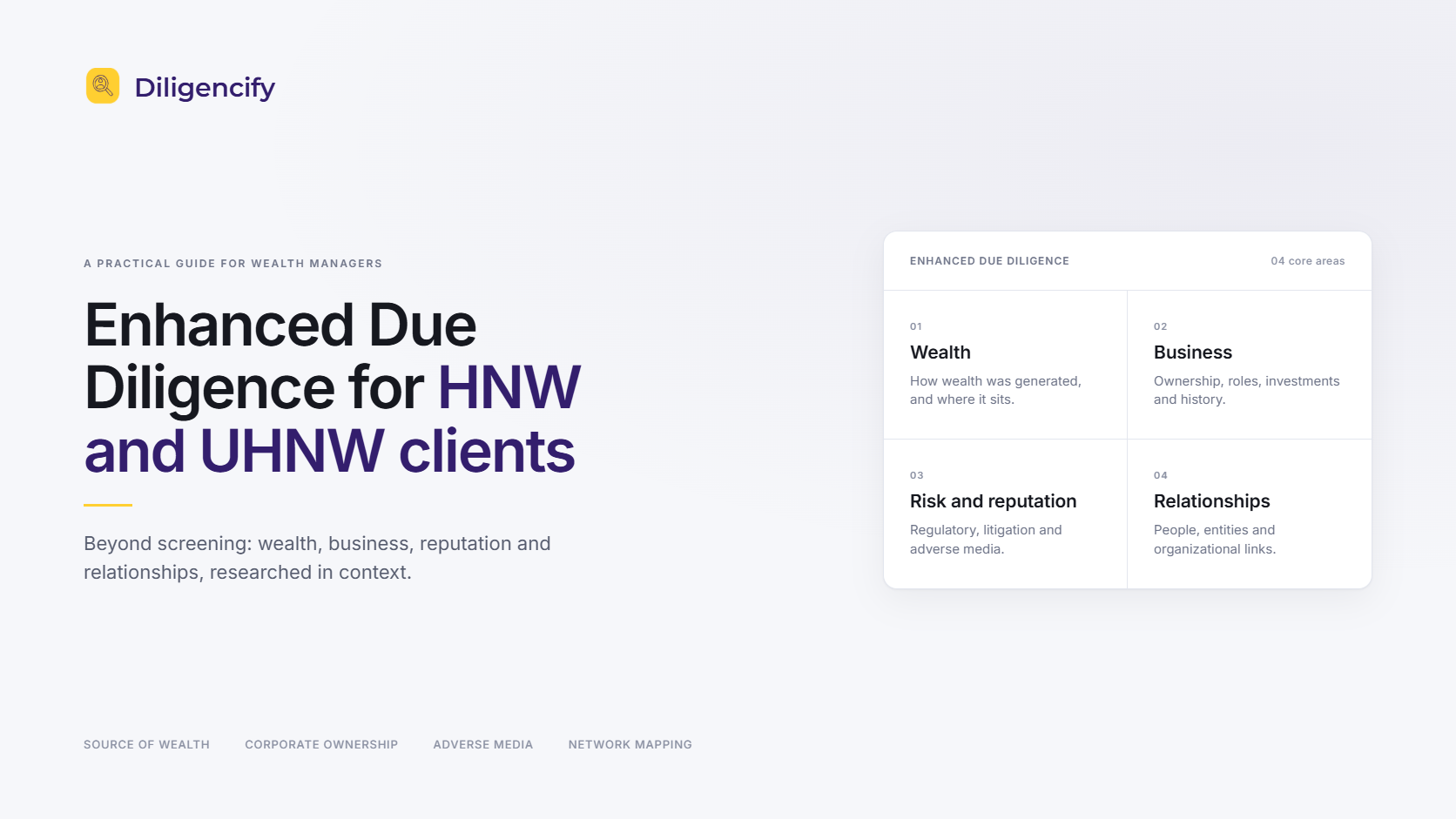
This becomes especially important when working with high-net-worth individuals (HNWIs) and ultra-high-net-worth individuals (UHNWIs). Complex ownership structures, international business interests, private investments, family relationships, philanthropic activities and multiple jurisdictions can make traditional KYC research insufficient.
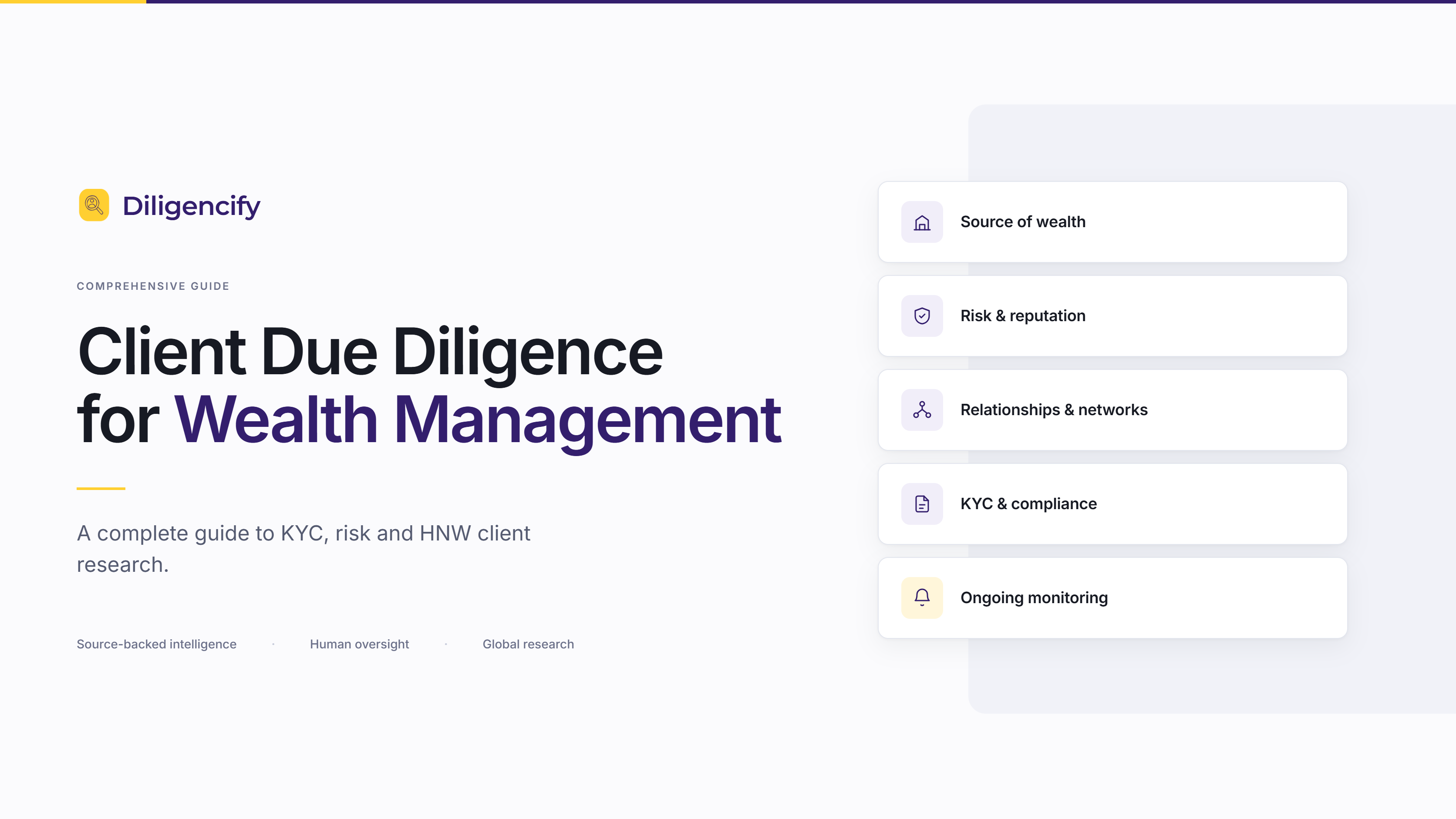
Modern wealth management teams need a more complete approach to client due diligence that combines regulatory research with wealth intelligence, reputation research, relationship mapping and ongoing monitoring.
What Is Client Due Diligence in Wealth Management?
Client due diligence (CDD) is the process of gathering and evaluating information about a prospective or existing client so that a wealth management organization can understand the client, assess relevant risks and make informed decisions about the relationship.
For wealth managers, CDD commonly involves understanding:
- The client's identity and professional background
- Their business interests and ownership structures
- Their source of wealth
- Their source of funds where relevant
- Assets and wealth indicators
- Corporate affiliations
- Family and professional relationships
- Political exposure and regulatory concerns
- Litigation and regulatory history
- Adverse media and reputational issues
- Philanthropic and charitable activities
- Geographic exposure
- Changes that may affect the risk profile
For straightforward clients, this information may be relatively easy to establish. For HNW and UHNW clients with international interests, however, information can be fragmented across corporate registries, regulatory records, news archives, company websites, professional profiles and other public sources.
That is why effective CDD increasingly requires research capabilities that go beyond basic database screening.
Why Traditional KYC Alone Is Not Enough
Traditional KYC processes are essential, but identity verification and screening provide only part of the picture.
A client may have no obvious screening hit while still requiring deeper investigation because of a complicated business structure, unusual source of wealth, significant political connections, reputational concerns or relationships with higher-risk individuals and organizations.
For wealth management teams, the question is therefore not simply whether a client can be verified. The more important questions are who the client is, how they built their wealth, what businesses and assets are connected to them, who they are connected to, whether there are reputational issues worth understanding and what has changed recently.
This broader research approach helps relationship teams and compliance teams develop a more complete understanding of the client.
The Role of Source of Wealth in Client Due Diligence
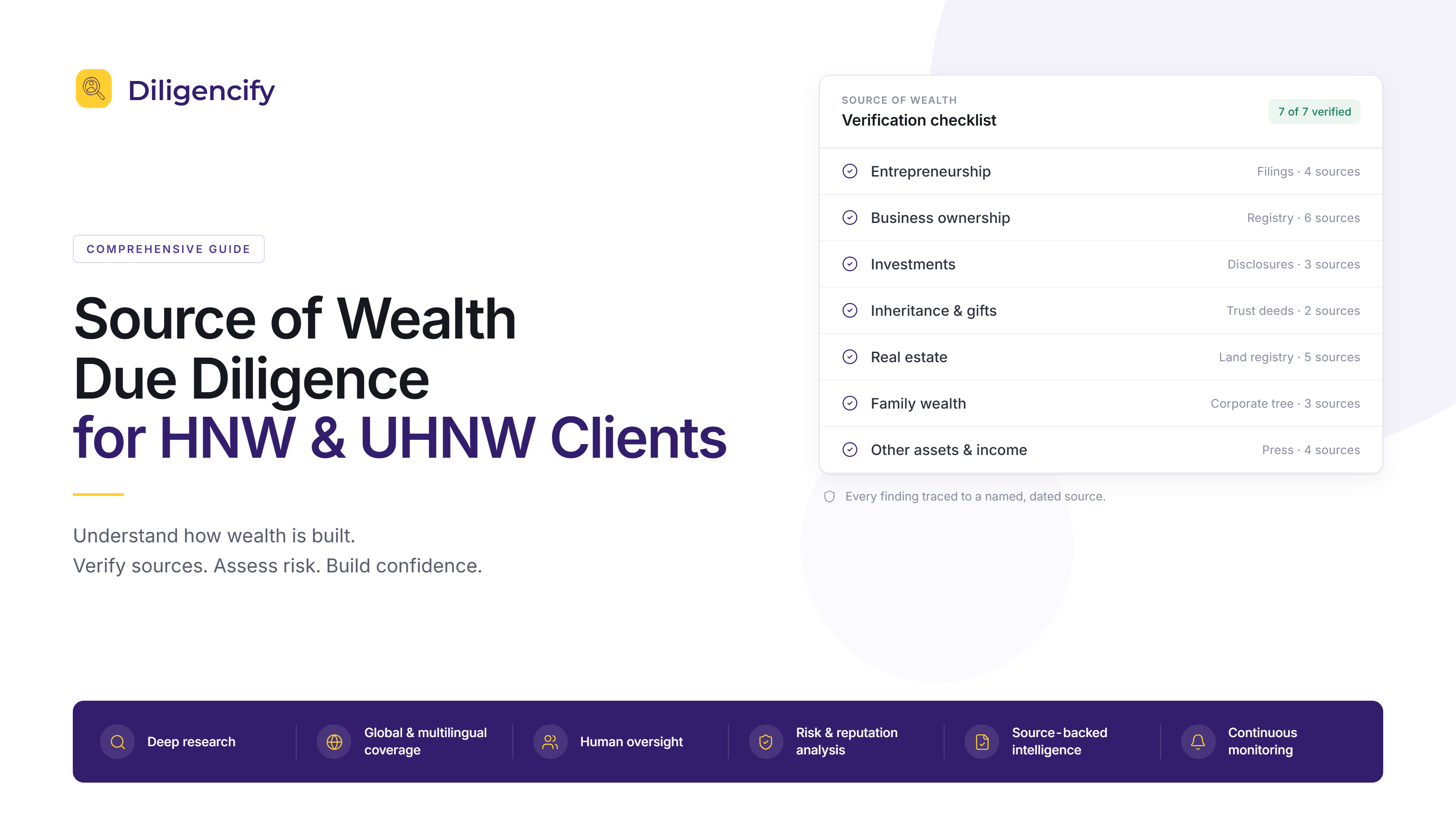
Source of Wealth (SoW) is one of the most important components of enhanced client research for HNW and UHNW relationships.
A wealth estimate alone does not explain how wealth was created. A comprehensive Source of Wealth investigation seeks to establish the economic activities and circumstances that contributed to an individual's overall wealth.
Potential sources may include entrepreneurship, company ownership, executive compensation, investment activity, real estate, inheritance, family wealth, private equity, venture capital and the sale of a business.
The objective is not simply to identify a number. It is to understand the story behind the wealth and evaluate whether available evidence supports that story.
For a deeper discussion, see our guide to Source of Wealth Due Diligence for HNW and UHNW Clients.
Reputation and Risk Research
Wealth management relationships can carry commercial and reputational consequences in addition to regulatory considerations.
A prospective client may be associated with litigation, regulatory enforcement, controversial businesses, political exposure or negative media coverage. These issues may not always appear through a simple name-based screening process.
Effective research should therefore consider the wider context around an individual.
This can include current and historical news coverage, regulatory actions, court and litigation information, corporate controversies, political exposure, professional misconduct allegations, associations with higher-risk entities and reputation-related developments.
Importantly, research should distinguish verified facts from allegations, commentary and unsubstantiated claims. Source traceability and human review remain important when information may influence a high-value client decision.
Understanding Relationships and Networks
An individual's risk and opportunity profile cannot always be understood in isolation.
Business partners, directors, shareholders, family members, advisors, foundations and other professional relationships can provide important context.
Relationship mapping can help wealth management teams understand corporate connections, board relationships, family connections, business partners, investment relationships and philanthropic networks.
This is particularly useful when assessing complex HNW and UHNW profiles.
Our article on Relationship Mapping and Prospect Intelligence for Wealth Managers explores how this intelligence can also support client development.
CDD Should Support Both Compliance and Client Development
One of the biggest opportunities for wealth management firms is connecting compliance intelligence with commercial intelligence.
The same research that helps a compliance team understand risk can help a relationship manager understand a prospective client more effectively.
For example, research into a prospective client's businesses, interests, philanthropic activities and professional relationships can provide context for a relationship manager preparing for a meeting.
This creates a more informed client experience while helping teams avoid duplicating research across departments.
How Technology Can Improve Client Due Diligence
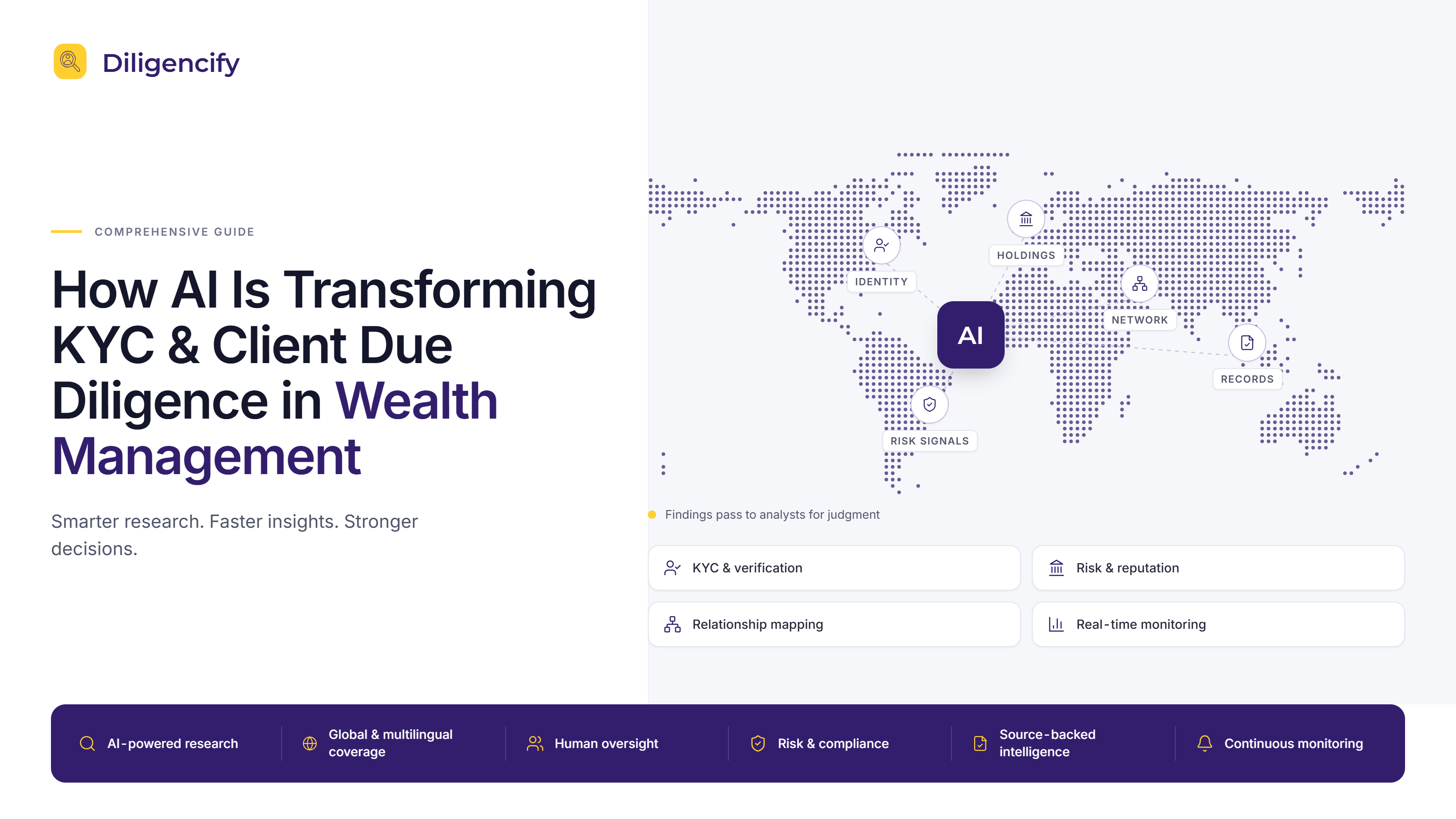
Modern AI-powered research tools can help wealth management teams process large amounts of fragmented information more efficiently.
Instead of manually searching dozens of sources, analysts can use technology to help identify relevant information, resolve entities, connect relationships, summarize findings and maintain source traceability.
However, automation should support professional judgment rather than replace it.
A strong technology-assisted CDD process should combine broad research coverage, entity resolution, source-backed findings, structured analysis, human review, clear documentation and ongoing monitoring.
Diligencify's approach combines AI-powered research with human oversight to help teams investigate wealth, risk, reputation, relationships and other dimensions of high-value profiles. Learn more on the Diligencify homepage.
Building a Repeatable Wealth Management CDD Process
A practical CDD workflow can be structured around six stages.
1. Identify
Establish the client's identity, aliases, professional history and relevant jurisdictions.
2. Investigate
Research businesses, wealth indicators, assets, professional history, regulatory information and reputation.
3. Connect
Identify relationships between the individual, companies, family members, organizations and other relevant entities.
4. Verify
Evaluate evidence and prioritize reliable, traceable sources.
5. Understand
Bring the information together into a structured client profile that can be reviewed by compliance and relationship teams.
6. Monitor
Continue tracking material changes in risk, reputation, business activity and other relevant information.
Common Challenges in Wealth Management CDD
Fragmented information
Relevant information may exist across many jurisdictions and source types.
Complex ownership
Private companies, holding structures and investment vehicles can make ownership difficult to understand.
Name ambiguity
Common names and multiple transliterations can produce false positives or incomplete results.
International research
Important information may exist in multiple languages and local sources.
Research time
Manual research can consume significant analyst time, especially for complex clients.
Keeping profiles current
A client profile can become outdated as businesses, relationships and reputational circumstances change.
What Good Client Due Diligence Looks Like
Effective wealth management CDD should provide more than a list of screening results.
It should give decision-makers a structured understanding of the client, supported by evidence and appropriate professional judgment.
The strongest processes help answer four fundamental questions:
Who is the client?
Where did the wealth come from?
What risks and relationships matter?
What has changed?
For firms managing sophisticated HNW and UHNW relationships, these questions are central to both responsible risk management and better client intelligence.
Conclusion
Client due diligence in wealth management is evolving beyond basic KYC checks. As client structures become more international and complex, firms need deeper research into source of wealth, assets, reputation, relationships, business activity and ongoing change.
Technology can make this research faster and more scalable, but high-quality due diligence still depends on evidence, transparency and human judgment.
For wealth managers, private banks, RIAs and family offices, the goal is not simply to complete a compliance checklist. The goal is to develop a reliable understanding of the people and relationships that matter most.
Explore Diligencify for AI-powered due diligence and prospect intelligence, or continue with our guide to Source of Wealth Due Diligence.